

Kimberly Sablon, PhD
In her role as Chief Technology Officer, Dr. Kimberly Sablon leads Riverside Research’s technical strategy and oversees the Independent Research and Development (IRAD) program.
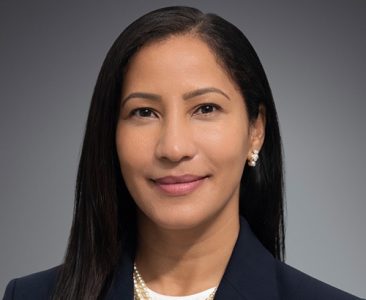
Before joining Riverside Research, Dr. Sablon served as the Principal Director for Trusted AI and Autonomy with the Undersecretary of Defense for Research and Engineering. There, she contributed to the oversight of AI/ML and autonomy research activities throughout the DoD as well as strategically and responsibly integrating AI with existing technologies and procedures.
Earlier in her career, Dr. Sablon set strategic direction as the Army’s science and technology director. She also held the Director for Basic Research role in the office of the Assistant Secretary of the Army for Acquisition, Logistics and Technology where she was responsible for formulating and defending research budgets, programs, plans, and priorities to Congress. Additionally, Dr. Sablon spent time at the Army Research Laboratory as a research physicist where she drove impactful research that resulted in over 70 published, peer-reviewed articles.
Dr. Sablon also holds a Ph.D. in Applied Physics from the University of Arkansas.

News & Insights
View All News
Riverside Research Executives Named 2026 Washington Exec Chief Officer Awards Finalists
Riverside Research, a national security nonprofit, is pleased to share that Chief Technology Officer (CTO), Dr. Kimberly Sablon, and Chief Human Resources Officer (CHRO), Madelyne D’Angelo, are finalists in the 2026 WashingtonExec Chief Officer Awards.
Read More
Accelerated Tasking Orchestration (flyer)